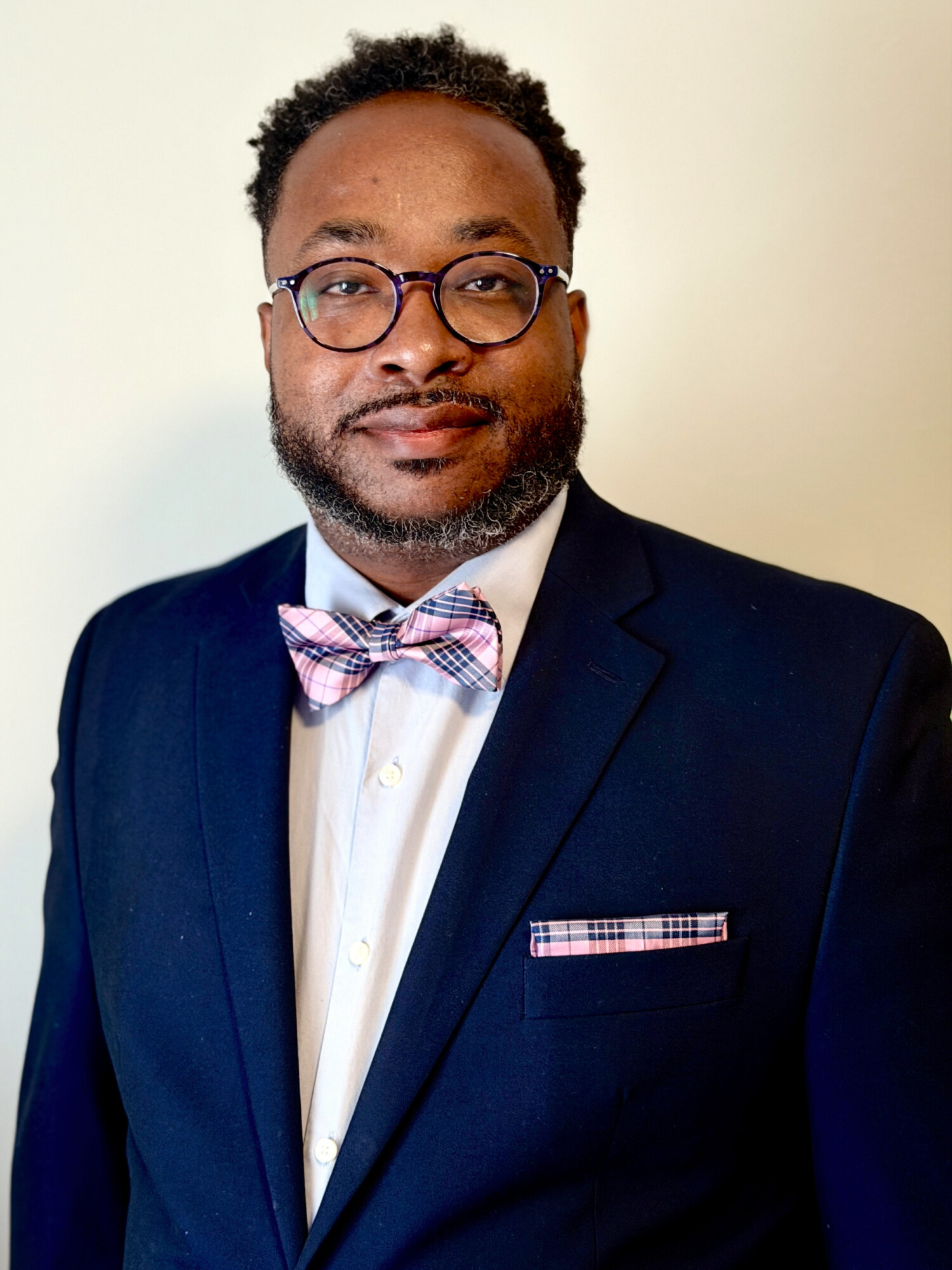
Medical school students’ days are filled with clinical rigor. While scientific precision is at the core of their studies, Dr. Jesse Herriott believes medical students must consider what it means to understand patients’ identities. The intersection of hard science and human vulnerability will be front and center when Herriott, an assistant professor of psychology in the Eunice Walker Johnson School of Social Sciences and Education, delivers his guest lecture to students in the University of Alabama at Birmingham (UAB) Heersink School of Medicine. Herriott will deliver “Trauma Informed Spiritual Practice” virtually on October 20.
"Spiritual and moral identity often exists as a core component of our formative development as human beings," Herriott explained. "Trauma informed spiritual practice is another way of viewing compassionate medical care. Even if a person does not consider themselves an adherent of a specific religious or spiritual practice, it's important to note that the root word of psychology is ‘psyche,’ in Greek, which translates to ‘mind, heart, and soul.’"
For future physicians, understanding this holistic perspective is not merely an academic exercise, it is an essential clinical skill. While clinical interventions can repair bone and tissue, psychological and emotional recovery often takes far longer.
The lecture underscores the importance and relevance of liberal arts scholarship. It reinforces that academic influence is measured by the intellectual depth and relevance of the ideas brought to the table. That sentiment applies not only to UAB’s students; it also applies to the talented students who will continue the legacy of Tornado leadership when they leave the College.
Herriott wants to remind Degans of their responsibility to advance the College’s mission by actively engaging with the global community. "Our students need to see that they belong, their gifts will make room for them, and they have the power to walk into spaces and be change agents," he said.
Researching What Makes Everyone Unique
Herriott’s lecture builds on a broader research agenda focused on educational access, specifically neurodiversity among adult learners. His doctoral dissertation examined how neurodiverse adults navigate higher education environments. While the concept of neurodiversity gained significant momentum through the autism rights movements of the early 1980s, neurological differences have been part of the human experience throughout history. However, foundational higher education frameworks did not always account for these differences.
According to Herriott, when scholar Malcolm Knowles helped popularize andragogy (the science and practice of adult learning) in the early 1960s, standard pedagogical models largely overlooked neurodiverse adult learners. "Today, more young adults are aware of their neurotype than ever before," Herriott observed. "My goal is to ensure that they too are supported and reminded that they matter and deserve to hold space in the world."
Building on that foundation, Herriott wants UAB’s students to support everyone’s uniqueness in medical practice. By advocating for trauma informed care in medical settings and neuroinclusive, student-centered learning in the classroom, Herriott’s work builds a vital bridge between education and clinical practice.
"Medical students who attend my seminar should walk away with a reminder of their role as healers," Herriott said. "Their future journey with patients carries an existential weight that resonates at the level of the soul. Compassionate care is vital within the medical community, and future physicians play a necessary role in our experience of life’s greatest challenges."